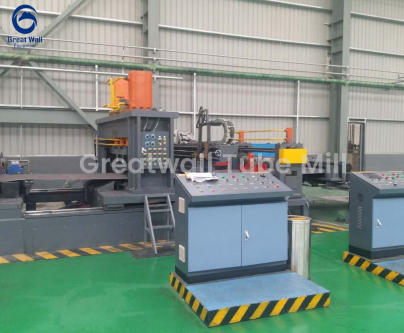
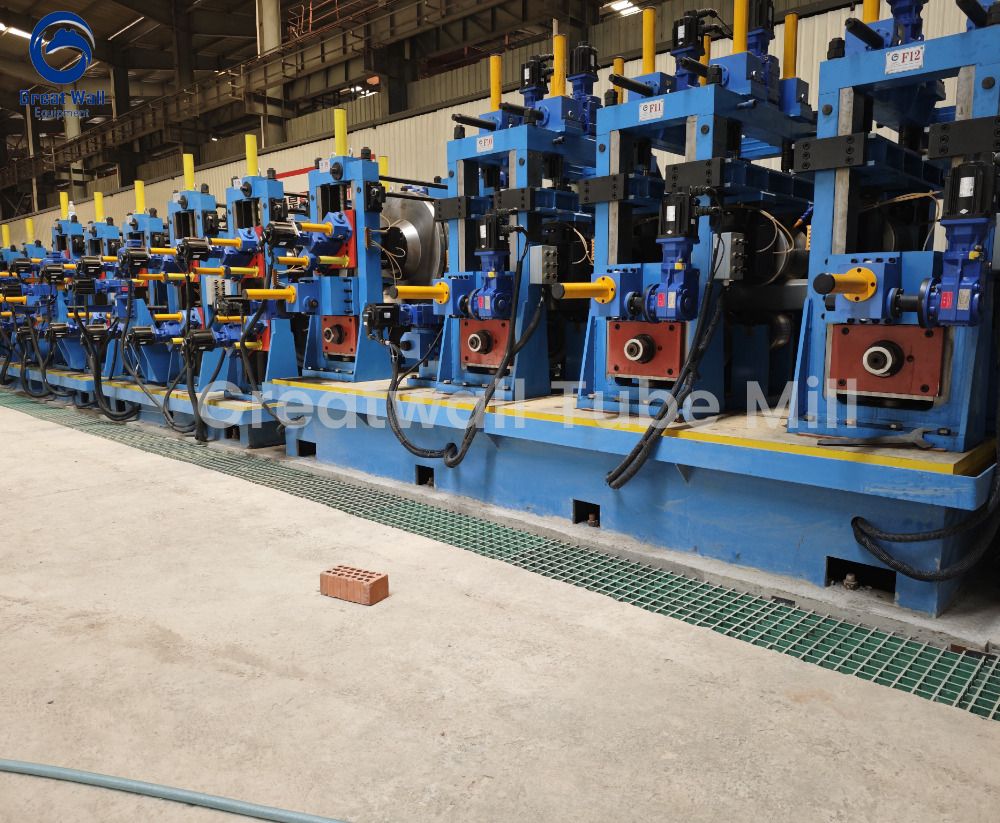
Industrial tube mills are specialized machines designed to manufacture tubes and pipes from flat metal strips or coils through a process known as tube forming. These machines are crucial for industries that require high-precision, strong, and durable tubes for a variety of applications, including construction, automotive, aerospace, and petrochemical sectors. The precision offered by industrial tube mills, often to within 0.01mm, ensures that the finished products meet stringent quality standards such as ASTM and DIN. This high level of precision not only enhances product integrity but also contributes to reduced material waste and improved manufacturing efficiency, ultimately driving business profitability.
The historical development of industrial tube mills dates back to the late 19th century when the demand for metal tubes surged alongside industrial growth. Innovations in metalworking techniques have transformed tube mills from basic mechanical devices into complex systems capable of producing various shapes, sizes, and types of tubing. Consequently, these machines have evolved into essential components of modern manufacturing setups. Today, industry-leading manufacturers such as Great Wall Equipment have pioneered technologies that enable these mills to produce high-quality tubes with unparalleled efficiency.
The practical applications of industrial tube mills are vast, impacting numerous sectors significantly. For example, in the automotive industry, tube mills produce components such as exhaust systems and roll cages that contribute to vehicle safety and performance. In construction, they supply structural steel tubes that provide the framework for buildings and bridges. Furthermore, industries like oil and gas rely on these mills to produce tubing for pipelines, ensuring the safe transport of materials across great distances. The value of industrial tube mills cannot be overstated, as they are integral to the production processes of countless essential products.
Common misconceptions about industrial tube mills often relate to the materials they can process and the types of products they can create. Some believe these mills are limited to specific metals; however, they can effectively process a range of materials, including stainless steel, carbon steel, and aluminum. Moreover, there is a misunderstanding regarding their output capabilities. While many assume that tube mills can only produce standard tubular shapes, advanced models can create a diverse assortment of profiles, including square, rectangular, and custom shapes tailored to customer specifications.
To illustrate the capabilities of industrial tube mills, consider a case study involving a major construction project where the requirement was for high-tensile structural tubes. By utilizing a state-of-the-art tube mill from Great Wall Equipment, the construction team was able to produce custom-sized tubes that met both the structural demands and the specific parameters outlined in project engineering standards. According to project leaders, leveraging the precision and adaptability of industrial tube mills resulted in a 20% reduction in production time and a 15% decrease in costs, demonstrating their remarkable efficiency.
In summary, industrial tube mills are essential machines that play a pivotal role in various industries, providing solutions that emphasize precision, flexibility, and efficiency. As technology continues to advance, the capabilities of these mills will expand, offering even greater value to businesses across sectors. For companies looking to invest in manufacturing processes that yield high-quality tubes and pipes, exploring options from reputable brands like Great Wall Equipment is a compelling next step. Whether for construction, automotive, or energy applications, understanding and utilizing industrial tube mills can drive significant improvements in operational efficacy and product quality. For more information, visit Great Wall Equipment and see how they can assist in fulfilling your industrial needs.
Latest News
CONTACT US
In addition to providing comprehensive services for equipment research and development, design, production, and sales, we also offer on-site installation and online remote guidance services.