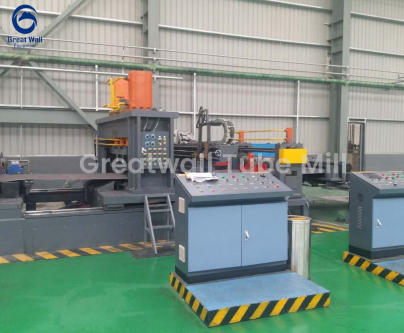
In the competitive landscape of manufacturing, optimizing your tube mill production line is crucial for enhancing efficiency and reducing production costs. Many manufacturers struggle with equipment downtime, inefficient processes, and excessive waste—all of which can hinder profitability. By implementing targeted optimization strategies, businesses can achieve reduced lead times and improved output quality. Here, we present several actionable tips to enhance your tube mill production line's efficiency, thereby addressing these common pain points and leading to sustained improvements in your production processes.
Quick Answer to Why: Efficient material flow minimizes delays and waste.
Operation Method: Assess the current layout of your tube mill production line to identify bottlenecks in material flow. Utilize software tools for simulation and redesign the layout for optimal accessibility and efficiency.
This technique is particularly useful for manufacturers struggling with high cycle times and inventory overflow. A streamlined layout can lead to a 25% reduction in processing time based on industry standards.
Quick Answer to Why: Reducing unplanned downtimes enhances overall productivity.
Operation Method: Utilize IoT sensors and data analytics to predict equipment failures. Schedule maintenance during non-peak hours based on predictive insights, ensuring machines operate at peak efficiency.
This is especially beneficial for companies experiencing frequent machinery breakdowns. According to a study from the U.S. Department of Energy, predictive maintenance can reduce downtime by up to 30% and increase equipment longevity.
Quick Answer to Why: Automation increases consistency and speeds up production.
Operation Method: Invest in automated systems such as robots for welding, cutting, and quality inspection processes. Choose solutions that provide real-time monitoring and feedback to continuously optimize operations.
This suggestion is ideal for high-volume production lines where precision and speed are essential. Industry reports indicate that automation can improve production rates by over 40%, significantly enhancing profitability.
Quick Answer to Why: Quality improvements reduce rework and wastage.
Operation Method: Implement Statistical Process Control (SPC) methods to monitor and control the production process. Regularly analyze data to identify trends and areas for improvement.
This method is suitable for manufacturers facing quality complaints from clients. According to Quality Digest, companies employing SPC can reduce defects by more than 50% in their production lines, which translates to higher customer satisfaction.
Quick Answer to Why: Energy efficiency lowers operational costs significantly.
Operation Method: Conduct an energy audit to identify high-consumption machines and replace them with energy-efficient models. Consider installing energy management systems to monitor usage.
This strategy is beneficial for businesses aiming to lower utility costs and reduce their environmental footprint. Implementing energy-efficient machinery, as reported by the International Energy Agency, could cut energy costs by around 20%.
To optimize your tube mill production line's efficiency, focus on streamlining material flow, implementing predictive maintenance, upgrading automation technologies, enhancing quality control procedures, and optimizing energy usage. By targeting these areas, manufacturers can reduce costs, minimize downtime, and improve overall operational efficiency.
Latest News
CONTACT US
In addition to providing comprehensive services for equipment research and development, design, production, and sales, we also offer on-site installation and online remote guidance services.